
Last updated: 1 Nov 2026 | 156 Views |

In short: If the flow is modest and there is enough burial depth, a round pipe is usually the more economical and easier-to-install choice. If you need to carry a large volume of water, burial depth is limited, or you need a wide opening to pass under a road or canal, a Box Culvert is the better fit. The actual size and class should be specified by the design engineer based on the flow and the load on top.
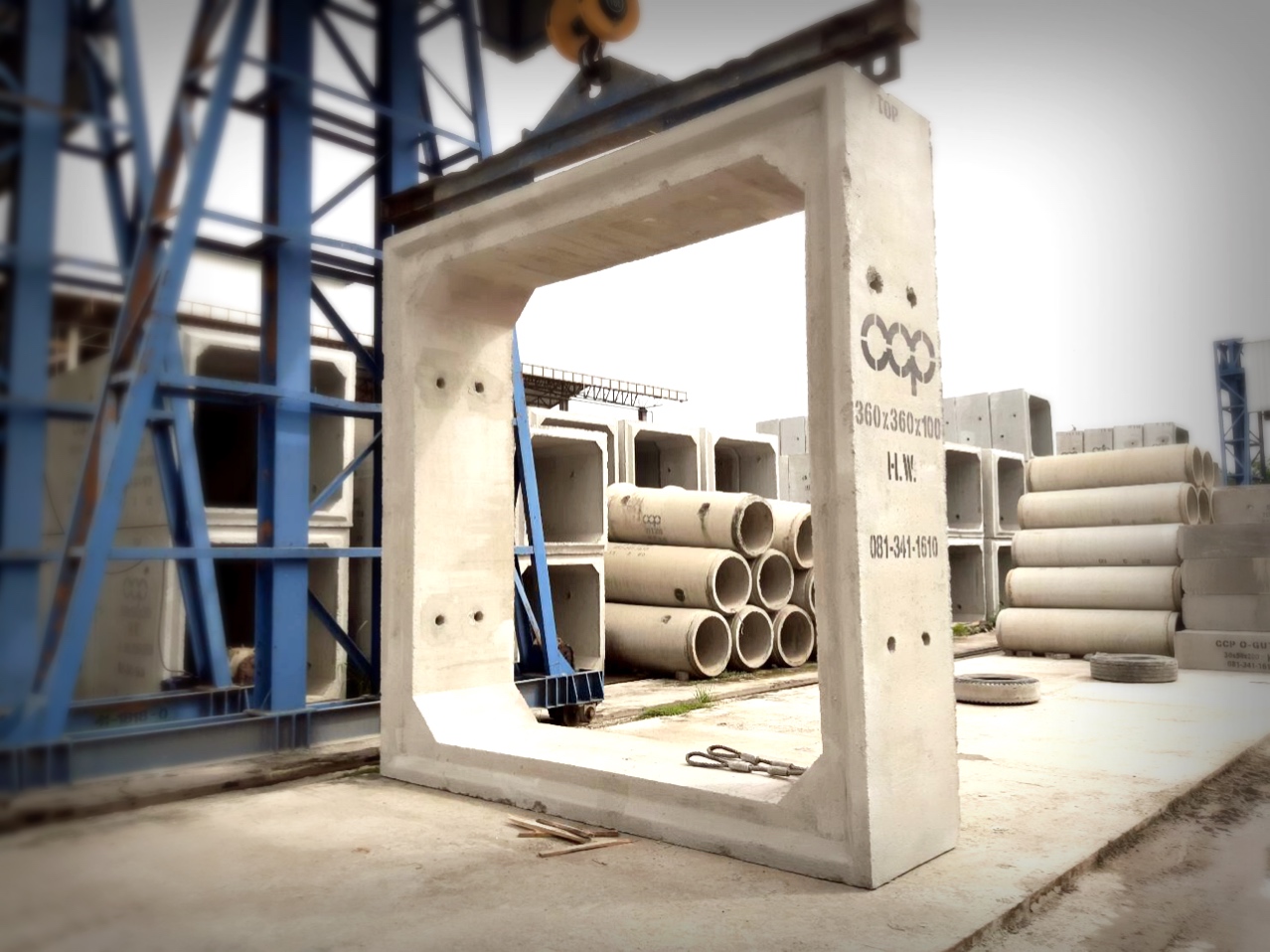
| Item | Round pipe (tongue-and-groove) | Box Culvert |
|---|---|---|
| Standard | TIS 128-2560 | TIS 1164-2559, TIS 1165-2559, TIS 1166-2559 and DOH 2015 design |
| Sizes made by CCP | Diameter 0.30–2.50 m, length 1–3 m | Width 0.50–3.60 m, length 1–3 m |
| Class / type | Reinforced, classes 1–4, and non-reinforced | Under-footpath type and under-carriageway type |
| Cross-section | Circular; resists surrounding soil pressure well | Rectangular; larger waterway area for the same height |
| Burial depth | Needs soil cover according to pipe size | Suits locations with limited depth, giving a wide opening without much height |
| Installation | Light units joined by tongue-and-groove; quick to install | Heavy units; needs a crane and a levelled bed |
| Typical uses | Roadside drains, housing estates, factories, small culverts | Road culverts, main drainage lines, underground canals, highway works |
| Certification | Made in Thailand (MiT) | Made in Thailand (MiT) |
Can round pipes and Box Culverts be used together in one system?
Yes, by connecting them through a manhole designed with openings for both types. CCP offers manholes for Box Culverts (Box out) and manholes to the DOH design.
What is the difference between the under-footpath and under-carriageway Box Culverts?
The under-carriageway type is designed to carry heavier vehicle loads. Drawings for both types are on the product page.
Where can I get drawings?
Download them at the bottom of the product page. For sizes without a file, ask our sales team.
Enquiries and quotations: tel. +66 61 409 8877 · LINE @ccp-concrete
Products: Tongue-and-groove pipe TIS 128 · Box Culvert · Manhole for Box Culvert (Box out) · Manhole to DOH 2015 design
Read more: How to choose a precast drainage channel
Source for sizes/standards: CCP product pages 9339 and 9404 (1 Nov 2026)


